
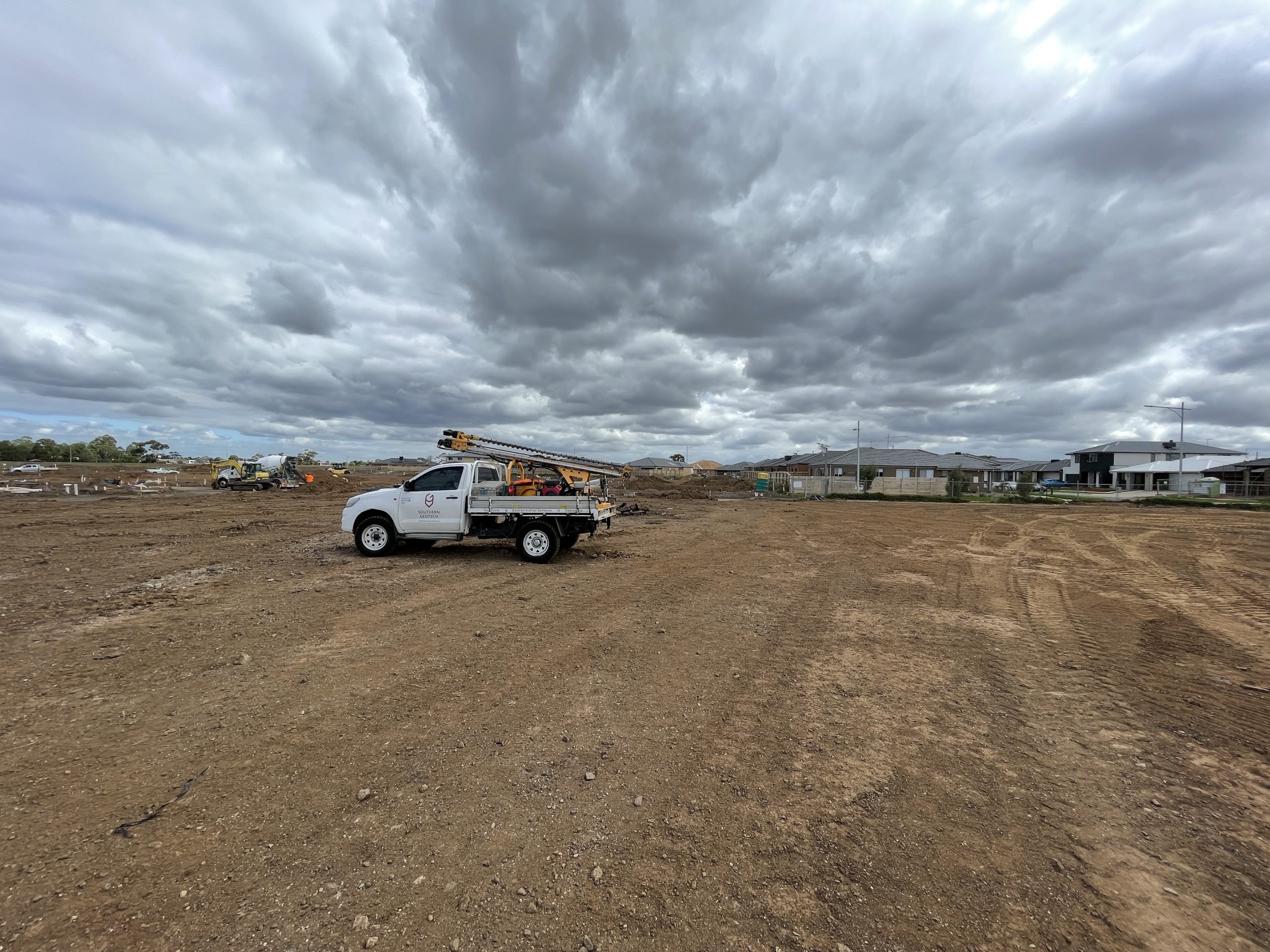
The type of soil on your site plays a critical role in determining the most suitable foundation system for your project. This is why soil testing and geotechnical investigations are essential before construction begins.
Understanding how soil conditions influence foundation design can help property owners make informed decisions, avoid costly surprises, and ensure their building remains stable for decades to come.
Why Soil Conditions Matter
Every building transfers its weight into the ground through its foundations. If the soil cannot adequately support that weight, movement can occur, resulting in cracking, uneven floors, sticking doors and windows, and potentially significant structural damage.
Not all soil behaves the same way. Some soils remain stable throughout the year, while others expand and contract significantly with changes in moisture content.
A professional soil testing service identifies the characteristics of the ground beneath your proposed building and provides recommendations for foundation design in accordance with Australian Standards.
How a Soil Test Influences Foundation Design
The results of a soil test for building projects provide engineers with important information including:
- Soil classification
- Bearing capacity
- Soil reactivity
- Groundwater conditions
- Presence of fill materials
- Depth to rock
- Subsurface profile
This information allows structural engineers to design foundations that are appropriate for the specific site conditions rather than relying on assumptions.
Site Classification
One of the primary outcomes of residential soil testing in Melbourne is the assignment of a site classification under the Australian Standard (AS 2870).
Common classifications include:
- Class P – Requiring specific engineering assessment
- Class S – Slightly reactive sites
- Class M – Moderately reactive sites
- Class H1 and H2 – Highly reactive sites
- Class E – Extremely reactive sites
As site reactivity increases, foundation requirements generally become more robust to accommodate expected ground movement. Unfortunately, your site’s classification isn’t something that can be chosen or changed; it’s determined by the natural conditions below the surface. Our role is to accurately assess and report these conditions so that your builder and engineer can design the most suitable footing system for your project.
Learn more about site classification here
Different Soil Conditions Require Different Foundation Systems
Not all foundations are suitable for every site. The type of soil present can significantly influence the foundation system recommended by your engineer. Stable soils may allow for standard raft slabs, while reactive clay sites often require stiffened raft slabs designed to better withstand ground movement.
In areas with variable soil conditions, fill material, or poor bearing capacity, deeper foundation systems such as piers may be necessary to transfer building loads to more stable ground. This is why a professional soil test is essential; It ensures the foundation design is tailored to the specific conditions of your site, helping to minimise future movement and structural issues.
The Cost of Choosing the Wrong Foundation
Attempting to save money by skipping a geotechnical investigation can become extremely expensive later.
Inadequate foundation design may lead to:
- Cracked walls and ceilings
- Uneven floors
- Brickwork damage
- Movement around doors and windows
- Structural repairs
- Insurance complications
The cost of repairing foundation-related issues often far exceeds the cost of a professional soil test.
Why Every Building Project Should Start with Soil Testing
Whether you are building a new home, extension, garage, shed, carport, townhouse development, or commercial structure, understanding your site’s soil conditions is the first step toward a successful project.
A professional geotechnical investigation provides the information required for safe, compliant, and cost-effective foundation design. It helps builders, engineers, architects, and homeowners make informed decisions while reducing the risk of costly surprises during construction.
Final Thoughts
No two building sites are exactly alike. The foundation that works perfectly on one property may be entirely unsuitable just a few streets away.
By investing in a professional soil testing in Melbourne, you gain a clear understanding of your site’s conditions and ensure your foundation is designed to suit the ground beneath it. The result is a more stable structure, reduced maintenance costs, and greater confidence throughout the construction process.
Before you build, make sure you understand what’s below the surface—because every successful foundation starts with a quality soil test.